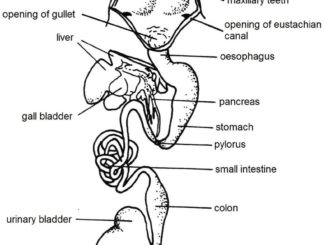
Digestive system of frog: Anatomy and Physiology of digestion
Digestive system of Frog: parts and functions Digestive system consists of digestive tract or alimentary canal along with the associated digestive glands. Alimentary canal: Alimentary […]

Digestive system of Frog: parts and functions Digestive system consists of digestive tract or alimentary canal along with the associated digestive glands. Alimentary canal: Alimentary […]
Characteristic features of frog Habits: Frogs are non-poisonous, harmless and usually silent animals. Unless disturbed, the detection of frog’s presence is difficult. Along with being […]
How to detect microorganisms in food ? Various techniques can be used for determination of microorganisms in food. Some of them give total count (viable+ […]
Contamination of milk: Contamination of milk occurs at two levels: On farm: Freshly drawn milk contains relatively few bacteria however Micrococcus and Streptococcus are usually […]

Canned foods: Heated canned foods are microbiologically more stable than most other foods. Better keeping quality of heated canned food is due to: Heat treatment […]

Contamination of meat The healthy inner flesh of the meat contains few or no micro-organisms although they have been found in lymph node and bone […]
Microbial analysis of food Food is a good culture medium for growth of many microorganisms. The presence of microorganisms in food causes decomposition and spoilage […]
Food Spoilage: Food spoilage refers to the damage or destruction of food so as to make it undesirable for human consumption. Such spoilage may be […]

What is microbial Leaching? The process by which metals are dissolved from ore-bearing rocks using micro-organisms is termed as microbial leaching. In present time, a […]
Mycotoxins: Mycotoxins are toxic chemical produced by some pathogenic strain of fungi. Many strains of fungi contaminate the food and produce potent mycotoxin in food. […]
Copyright © 2024 | WordPress Theme by MH Themes